Rights and privileges have always been the citizens’ clamor. These are what we rally for. These rights, such as to participate, gives us what we call power. Quoting from our favorite childhood movie, with great power comes great responsibility. If more than we realize, in a participatory democracy it is the citizens that hold power. This power is harnessed through — well you might have guessed it– participation. Our powers may be limited as to the fact that we are not the ones implementing laws and policies, we are not the ones who fund public projects, and we are not the final decision-makers on the platforms that are going to be implemented.
In this country, participation is not harnessed by the citizens and not encouraged by the ones in position, which makes the ones in position take advantage of the lack of participation and involvement citizens. Even as a college student and belonging in the middle class, I still do not clearly know all my rights and privileges as a citizen, and I know a lot of people in my age who are also college-educated do not know theirs too. This entails that there is a lack of education on the rights that we do have. Our national hero, Jose Rizal, implies that we should have more education to not be taken advantage of, or abused by anyone .I think we should embody this in our educational system– cultivating critical thinking and loving to learn knowledge. The standards of what makes a Filipino citizen are set by us, and only us.
With this, I come back to my first point of having great power means having great responsibility. Rights and responsibilities go hand in hand. Having rights means having responsibilities. This is one example of a social contract that is legally bound within us. For instance, we always remind each other to vote and exercise our right to vote, which is not much compelling, instead we should say that it is our responsibility to vote as much as it is our right. The rights that we know we have are something that we must demand, and we do demand that especially if these rights are not given to us. Yet we must also take into great account, that we must do our responsibilities that come with these rights.
“A person is of more value than the whole world.” -St. Mary Euphrasia
This line has been instilled into my mind by my alma mater ever since when I was in elementary. At that time, this was just something that had to be memorized because it is expected from us as students, but as I grew older, I slowly came to realize how powerful the meaning of this sentence is. As I am approaching the last months of my undergraduate life, it is very interesting that I am going back to this line again, but this time, with a clearer and deeper understanding of it.
From our very own Parañaque City which is one of the most business friendly cities in Metro Manila, to Taguig’s Disaster Preparedness, to Pasig’s environment-friendly bike share, to the wonderful museum of Valenzuela, and to San Juan’s Greenhills Shopping Center until Navotas that surprised us with its efforts on its development despite being tagged as one of the poorest cities in Metro Manila, it was clearly shown how each local government unit in the Philippines is unique from its size, population, products, tourist spots, leaders and their kind of leadership, budget allotment, and the people living in them.
Although we have 17 different administrative regions that seemingly divide our country, we should appreciate how rich and diverse the culture and biodiversity of the Philippines is which contributes a lot to the progress of our country, combined, of course, with the strong support from its citizens. All these differences put together are actually what makes our country more lovable and a strategic place to live in.
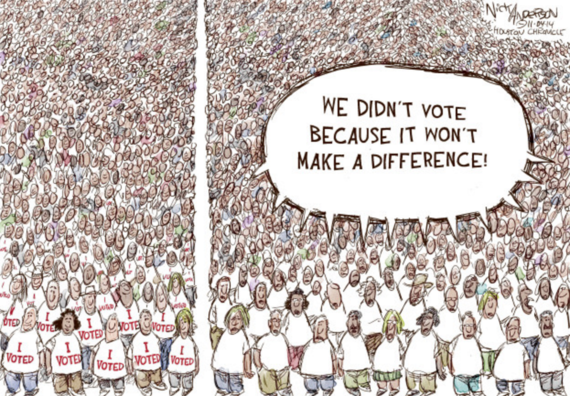
Every action of individuals combined with the aid of the government can really be world changing because that is how powerful citizenship and governance can be. On May 13, 2019, the Philippines had its national midterm elections which is one of the best examples to support this statement. Some people might think that their vote will not change anything, but in actuality, these people who do not vote can change the result of the elections if they will be gathered together and counted collectively. This is how strong an individual can make as impact.
I voted for the first time in 2016 during the presidential elections and exercised my right again this 2019 for the midterm election. What I realized is how lucky I am to be exposed in a very woke environment such as UP Diliman where I am given a proper education and I am able to choose more competent candidates who will contribute for the improvement of the country. This is how privileged I am. What I want now is to use this education to raise awareness on other people so that they would know their true value. People around me are very much angry with the results of the elections and although I understand where they are coming from, we should not just end with becoming angry. We should use what we know to enlighten other people who were not lucky enough to receive the same kind of knowledge and information that we receive and learn everyday. There will always be more than one side of the story. I remember being able to watch one video where people were explaining why they support Bong Revilla when we know that he had a case of graft. They explained that they feel “kilig” because of how good looking he is and that they do not believe that he actually stole something from the country because he is already rich. We know that this answer is not well thought of, but can we actually blame them? We should not stop at being angry at them and telling them they are bobo. We should use what we know to help them unleash the power within them and so that we can reach our full potential and help one another in improving our beloved country, the Philippines.
We cannot do everything alone, but if we are able to ignite the light within every people around us and share the knowledge we have with them and encourage them to think critically and logically, then we can make wonders.
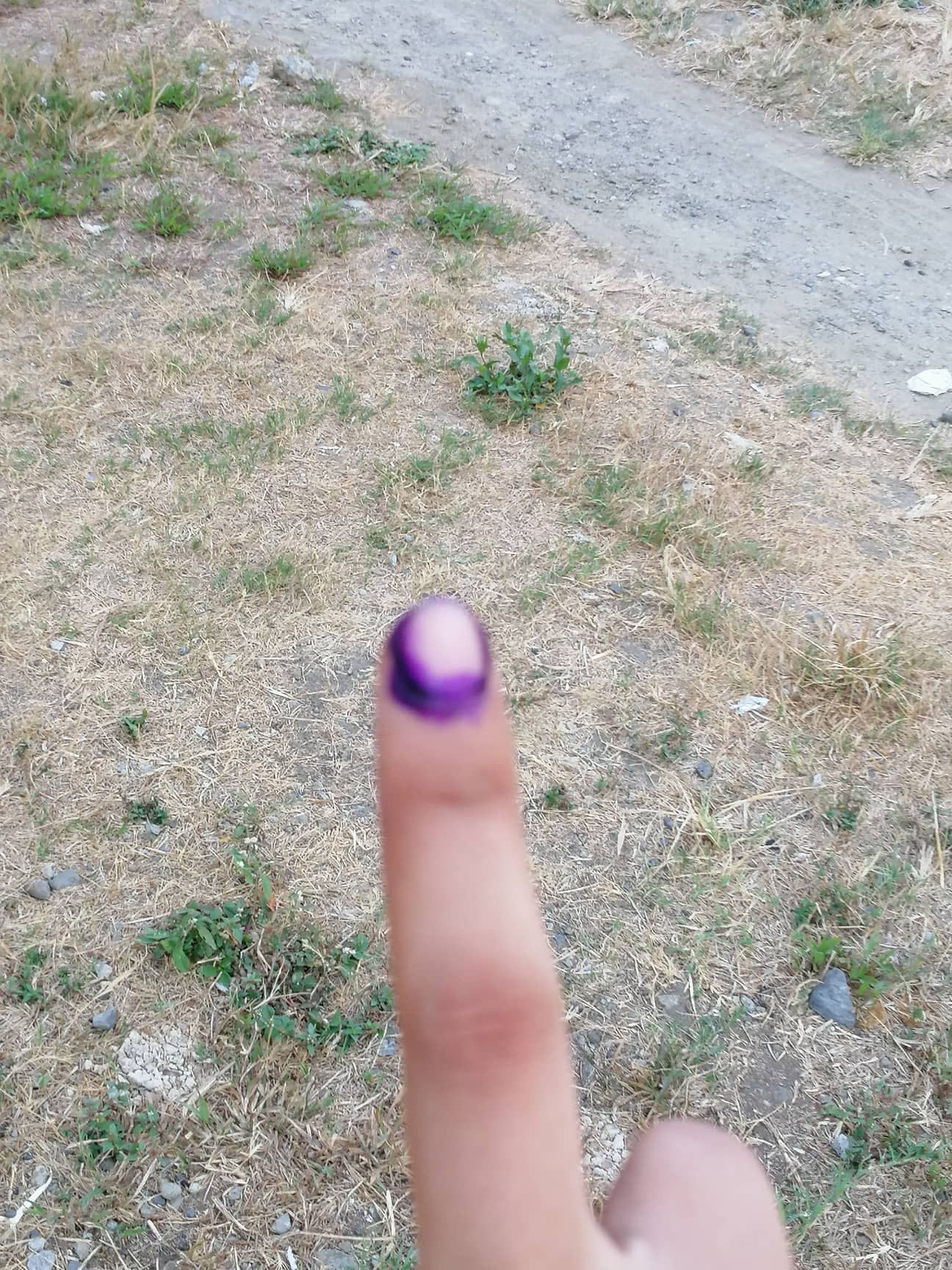
This national elections, I exercised my right to vote because I believe in the importance of making my voice be heard.
There are three main things that I can say I will be able to take with me at the end of the semester because of this class
Citizenship is flexible.
Communication is key especially when it comes to the government and its people.
I am powerful.
“Our deepest fear is not that we are inadequate. Our deepest fear is that we are powerful beyond measure.” -Akeelah and the Bee
As a citizen of this country, I am aware of my duties, responsibilities, and rights. Although I am young, I know that I am capable of making an impact through empowering others like me and working together with people who are equally passionate about taking back their place in the Filipino society – those of us whose voices have been muffled by an oppressive regime seeking only to benefit those at the top at the expense of those who have no choice, those who have been made to believe that their voices are weak. We must use our voice to speak up for those who cannot, and we must use our power in order to give others a chance to better lives.
As a citizen of this country, I am aware that the role I play is not always met with acceptance. I know that there is only so much I can do given the current power that I have as an individual. At the end of the day, we are bound by the rules of the society we are in and forced to endure the situation our country is in everyday. However, this should give us all the more reason to fight back.
We should not let ourselves be mere receivers but instead, we should keep in mind that we are capable of playing much bigger roles, and in order to do this we must know what we must not only be aware of what we can do as individuals but also work together – we must never underestimate the collective impact that we have in shaping our ideal society, and we must keep this in mind as we tread onto darker paths.
There are different kinds of contribution, some direct and indirect; it can take the form of financial assistance, physical structures, Human capital, preservation of natural resources, advancement of technology etc. However, as a citizen of the state what are the things I can do to be involved in the betterment of the country? Honestly, I have a lot of ideas how to, the dilemma is now which one will have the strongest impact for participation.
When were travelling to Paranaque City, I noticed people were automatically forming a line to get a train ticket, after purchasing the ticket will directly enter the beep gates and head down the railway to wait for the train. When we arrived at MRT, the same thing occurred but this time it was enforced, there were multiple security personnel roaming around and assisting those who seemed lost. When we reached the platform, everyone was lineup again perpendicular to the railway, all of us waiting for the train. Finally the train came and we boarded it then went on our way, now there are a lot of stories shared in social media about public transportation, more often it happened on the bus and trains, therefore I was careful and keeping an extra eye to my belongings as well ensuring my groupmates were in my field of vision. At last, we arrived at our desired station and started walking to the PNR station, by this time we were now relying on Google maps, and then we started asking for directions on how to get to Paranaque. We followed the instructions and boarded the PNR and got off Bicutan station, after which we once again asked directions, we were strongly encouraged by the people we asked to ride a cab instead of riding a tricycle. Thus, we followed and booked a grab to get us there. Overall the trip was an exciting experience due to the fact we were exposed to the condition of certain places and public interaction. One of the few things I picked up on this trip in regard to Citizen Participation was the “Discipline” of the people. The way I saw it the discipline of the people kept order to the railway, and another thing was by their attitude of “Abiding” kept things tidy and organize, just like the separation of males and females in the MRT, I observed. The lesson for that experience when it came to Citizen Participation was; “Citizen Participation is not limited on what you can give but rather what you can do and that is be discipline and abide by the rules and regulations”
Next greatest participation that the Citizen can give is to practice their right to “vote”. Unfortunately, I failed to cast any vote due to my failure of register myself. I have heard a lot of people talking about their respective choices and their supporting arguments, I have even seen a causal discussion turning into a heated argument, and fortunately it longer escalated for the worst. Then finally May 13 came and most people (if not everyone) started to vote and observe the status of their respective candidates. Discussion, arguments, quarrels and rants started to be bombarded in social media. To the point in even involved religion, where some people were now questioning the validity and involvement of a certain religious group. I’m not sure whether or not rumors are true about the group but I do doubt the credibility and transparency of their statements. Personally, I do not agree of the some of the members in the senate, but then again I have no say since I did not practice my right to vote. Nevertheless, the best I can do now, to be discipline enough and to do my best to abide by the rules and laws made by the constitution. Moreover, it would be best for the country if we would all look after the welfare of those around us just as we are concern with our own welfare.
There are a lot of more of form of Citizen Participation, for now however, these are the things that struck me the most. If there are comments, suggestions & arguments anyone would like to share, as long as it is constructive, then allow me to get popcorn, snacks and drinks so we can talk to our hearts content.
A citizen is someone who is subjected to the conditions stated in the 1987 constitution. On a deeper degree, a citizen is someone who makes himself/herself aware of the concerns of the community and the political arena, who actively involves and participates in forwarding their position and sentiments to the government. However, most of the time this is not possible due to the limitations of the power of a citizen.
In the case of some LGUs, public servants introduce initiatives and assume what will be best for their constituents. In most cases especially in the Philippine, the system is, after election, leaders seem to be on their own. They see themselves as superiors, who have the monopoly of knowledge, running the government as if it is theirs. As a result, projects and programs being produced do not really match what the people and the country really need or even solve the problem at hand, if there’s any. The highest level of participation is as far as consultation. In most instances, it would be on the level of informing.
This shall be the unfortunate position of a Filipino citizen as of now. However, through a collective action by the citizens, either through election or other avenues, this might somehow be changed. This shall not be our destiny as a Filipino nation.
In the beginning of the course, I often felt that citizenship and participation is something that already I have a grasp of. For a public administration student, citizen participation is something that comes up so often that it has become the ideal of many. After all, the people is the cornerstone on which the government was built upon. In this last individual entry that each of us will make, we were asked to reflect on the prospects and limits of our power as citizens. Before answering this, I would like to reflect on the recent national event that has passed.
The election season has come and gone and we are presented
with the newly elected officials who will be burdened with the nation’s
collective hopes, dreams and aspirations. It is the hope of the masses, from
the youth to the elderly, that the newly elected leaders will have the skills
and characteristics expected from an exemplary public servant. This, however,
remains to be a far-fetched dream that was extinguished by the reality of
politics wherein self-preservation is rampant and selfish interests are put
forth before anything else. Often, I contemplate as to why there are voters who
repeatedly elects candidates from political families, case-riddled politicians
or well-known celebrities and action stars. However, once one takes the time to
understand the psyche and offer an open mind to the voices of these voters, one
is exposed to the cruel reality. There are indeed many voters who have grown
numb to corruption and other ails that plague Philippine politics. It is
unfortunate that many Filipinos think so little of their votes and genuinely
believes that change will not come from engaging in this activity.
Though one cannot completely blame the populace for their
voting behavior. We must also look upon the system that we live in and the
conditions that made these outcomes possible. The cyclical poverty, lack of
quality education, issues of economic and political nature, rampant corruption
and lack of accountability in the government exists and has crippled the masses
and shaped the point of view of the Filipino people. Perhaps it is the
recurring poverty that has brought upon the vulnerability of voters to ill
transactions done before the election and the campaign and these
vulnerabilities are utilized by some for their own interests.
For the common Pilipino like me the question would be “anong
magagawa ko?”
Rizal once implied that we get the government (and the
leaders) that we deserve. However, does the Philippines really deserve the
leaders that we have today?
Power must emanate from the people. This means that all
Filipino and groups, regardless of religion, political beliefs, socioeconomic
status or age is a stakeholder. Citizen participation comes in many different
ways and there are many types of citizen engagement or action. The levels of
participation can be identified as non-participation, tokenism, and to citizen
control[1]. Non-participation is the lowest rung wherein the real
objective is to educate people or “cure” and does not involve them in the
planning and other aspects of the program. Tokenism provides an avenue for the
voice and views of the citizens, however, there is no assurance that these
views are heard or acted upon. Finally, up in the higher rungs of the ladder
lies citizen power where the people are the dominant powerholder and has an
increasing level of influence in decision making.
Public participation, with its perks, also comes with
disadvantages. Citizen participation can strengthen rapport between the
government and the masses whilst possibly improving government planning through
a needs-based approach. It may improve the quality of decisions and actions of
the government by being more people-centered. Citizens will also have a higher
sense of inclusion and perceived importance in their role as member of the
society as well as a higher regard and understanding for government processes.
Ultimately, by harboring the various voices of the people and providing a
platform wherein these opinions are considered, only then will genuine
consensus be built. However, citizen participation also comes with
disadvantages or difficulties. One of which is the time and financial costs
that this would incur. For national issues, it will be harder to take into
account each and every stakeholder’s interest and it is even harder to weigh
these interests. There are also factors such as the influence of some interest
groups may dominate over others. Stakeholder groups with concrete and highly
dominative influence and values may overshadow others prematurely. This may,
instead of promoting social cohesion and unity, can cause a rift between groups
with strong political and social ideals. Lastly, the government might receive the
bulk of the hostility in the process.
To end this reflection on citizen participation, I would
like to focus on the concept of social accountability[2]. Apart from
the traditional modes of civic action such as election and rallying, social
accountability refers to actions done by civil society groups or your average
Filipino citizen that aims toward holding officials and public servant
accountable for their performance. Its ultimate goal is to improve the welfare of
the people and protect our rights. What makes social accountability a more
preferred mode of citizen participation is it’s four pillars which are: (1)
organized and capable citizen’s groups; (2) willing and enabling environment
promoted by public officials who champion citizen power; (3) cultural
appropriateness; and (4) access to information.
This approach encourages constant vigilance, proactiveness
and awareness in the part of the public long after the election season is over.
Aside from these, social accountability grounds itself in gathering data and
analyzing existing information to serve public interest efficiently,
effectively, and fairly. Social accountability, for me, is a higher form of engagement
since it demands and fosters accountability from both the government and the public.
Its principles advocate a responsible form of civic society engagement that does
not capitalize in petty mudslinging or libelous statements.
The last point that I would like to impart is that citizen
and voter’s education is the paramount concern. Above anything else, educating
and spreading awareness is the most important part of civic participation, regardless
of the method and boundaries of citizen participation available or
operationalized in the society. For regardless of the size, influence and
diversity of civil society organizations, unless they operate on free minds, free
will, and sincere regard for public interest, they will be merely puppets and
machinations to the ploy of self-centered individuals that use the masses to
their advantage.
Recently, we engaged with a government official of Paranaque to know how the issues and processes of BPLO were harnessed and improved to better serve the public. We intended to research how the residents feel about it, what impacts did the government think they made, and the impacts that the residents felt towards the streamlining of 19-step process of procuring a business permit or its renewal.
They remarked that it was a matter of good management and good will that made the office the epitome of progress when it comes to reducing red tape and streamlining the process, making it more convenient and better for the public– and it would make the government employees more productive and more effective in the jobs that they do. I may not participate in the initiative directly as the ones who do are usually the entrepreneurs, but If you come to think of it, these businesses-big, medium or small can greatly affect the economy of the whole city. As a resident, it would give you access to more goods and options for better or cheaper alternatives of your liking. It would boost the economy of the city. A better economy means a better quality of life for the residents.
These businesses that were processed faster because of the upgraded process of the LGU made the city more attractive to investors, even for those outside the city. No wonder, it was the business licensing was a priority to improve. As these entities grew in number, more jobs were created for the residents of the city. If Paranaque was able to do fix a problem after another to achieve the current system they have now, then it would be easier for other cities too with Paranaque as the standard for good management.
The city of Paranaque may be called as the City of Lights, the Mega City by the Bay or ,due to the prominence of Ready-to-wear clothing shops in the area, the Fashion Capital of the Philippines. That aside, the city is also known as one if the busiest location in terms of business outgrowth and is we home to many investment opportunities. To further improve the quality of services provided to its constituents the local administration pursued excellence in the aspect of business permits and licensing process, furthering investment opportunities and lending an open hand to the citizens who are interested in putting up their own businesses, making the city more desirable for individuals who seek economic growth and social development. The initiative of the local government proved to be effective since the city BPLO was recognized as one of the best in the country. One may even consider this thrust towards encouraging business activities and economic growth as one of the reason behind the locale’s prominence, although this disparity between neighboring areas have rested to a backlash in the form of congestion and traffic.
As was repeatedly emphasized in the previous entries, the group decided on focusing on this government initiative. Evidently, the actual situation in the city boasts of the abundance of MSMEs or Micro, Small and Medium Enterprises. The BPLO office is remarkably packed with clients. However, it is also noteworthy to emphasize the actual reduction of the 19 step process to 3 steps, thereby eliminating red tape and making it easier and far more convenient for citizens to avail of the service. Furthemore, numerous plans for expansion and development are thought of by the administration.
As expected, there are notable discrepancies with the excessively appealing presentation of the administration and the actual feedback from the citizens who avail of the actual services.
While there are numerous factors that could affect the actual feedback and the process, there is an obvious interplay between the two. As such it is important to implement genuine citizen participation in order to appropriately craft initiatives that would actually benefit the populace. Participation does not simply come in the form of mere suggestion. Instead, genuine active citizen participation would entice both the government and civil society to effect realistic and appropriate development.
The journey to Paranaque was a long and tedious adventure. For the first time, we experience the challenge of commuting to Paranaque city with no intial inquiry of how to get there. We merely looked into maps and search possible routes on how to get there. Luckily, google maps was of great help and it has helped us to get to our destination. It was indeed a long and tiring journey but it was a worth while experience.
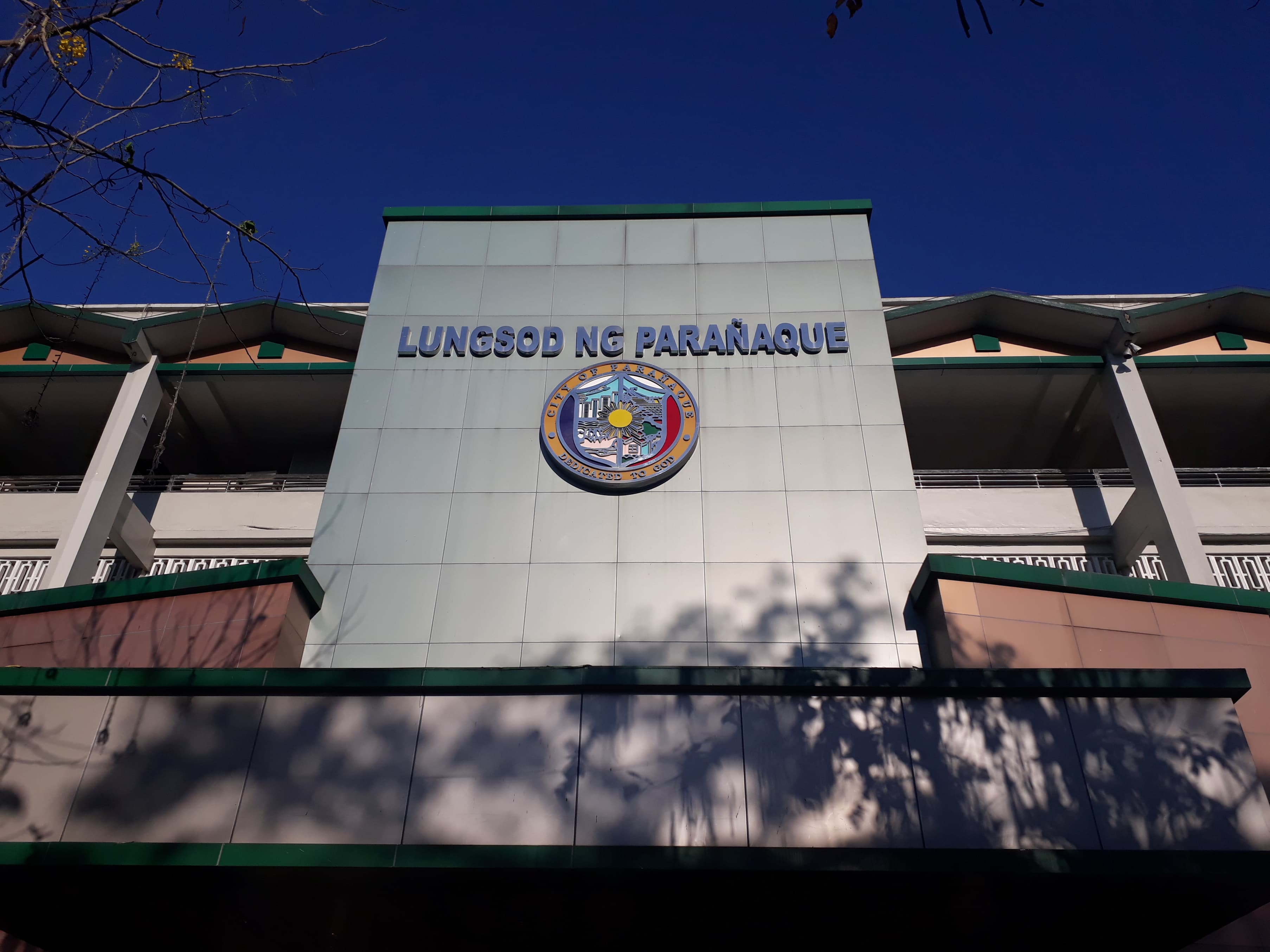
By the time we reach Paranaque City, we noticed that our travels took us approximately 4hrs, we traveled by rail way; we first used the LRT all the way to cubao, then we boarded the MRT and alighted at Magallanes station. Next we followed the highway and found a park beneath the said highway. After asking a few bystanders and guards, we finally saw the PNR station that we later on rode all the way to Bitucan. However, when we arrived at Bitucan station, we were under the impression that we were relatively close to Paranaque, however, we were wrong for wer still need to ride more than 2 tricycles to get to our destination. We where then advised by the people we were asking for direction that it would be more practical to take a cab. As a result, we took a grab to get there, then finally we arrived and entered the Paranaque City Hall with the hope of getting a chance to interview employees. Despite our long hours of travel, our interview only lasted more or less an hour. However, the information we received was worth the trip.
To say with all honestly, when we first arrived at the Paranaque City Hall, we were rather anxious of how will the people there treat us, especially when we were taking short clips and pictures of the City Hall. More importantly, we were even worried that they would not entertain us since we had no appointment whatsoever, despite our sending of letters via email, we received no response of any kind.
It is pleasing to know that the people working under BPLO were actually affable and approachable. We simply asked of them if we could conduct short interviews to know more of Paranaque City and their operations, after we have introduce ourselves. Interestingly, an employee immediately introduced us to one of the legal officers accommodated our request of an interview.
During the interview, there were so many interesting developments that led to the improvement of Paranaque City, under their specific office. I learned a lot during the interview but what really caught my attention was 3 topics.
The re-engineering of there phases of processing business permits. Initially, the process had 19 steps to undergo before the applicant receive their permits. However, it was later then collapsed into 5 then lastly into 3. The process was so efficient and effective that the 3 steps later gave more opportunities to business to apply for business permits etc.
The continues plan for development, the legal officer opened to us that they plan to recruit more personnel and expand the space of their office to provide an even larger scale service to the masses. There main concern is that from time to time, they lack the man power to accommodate more applicants simultaneously. Aside from the increase of space and man power, plans for easy access was also being formulated to address the concern of inaccessibility of those far from the City Hall.
The re engineering of Paranaque was actually inspired by the re engineering of Muntinlupa.
Overall, the trip was interesting and educational, we learned a lot on how to commute to Paranaque, and about the Paranaque City along with its development as a whole. As future leaders of this country, it would be of great help for us to be informed of such re-engineering and structuring that we may tap the potential of our country and build from there.
The Quezon City Safe Spaces initiative has been in place for a few years now, but whether or not there have been significant results following its implementation proves a difficult question to answer. Depending on who you ask, the people’s perception of the effectiveness of the initiative varies because it depends on many other variables that are hard to control, even with the use of law. Such variables include a person’s social status, family background, and education. Taking these into consideration, the implementation of an ordinance, or even a law, to prevent sexual harassment is not enough to tackle its root causes – all of which contribute to internalized misogyny and a mindset that perpetuates a society where victims are at fault: for not being careful enough, for not dressing properly, for “hanging out with the boys”, and a lot of other excuses which ultimately protect harassers from facing accountability for their own actions.
Coming from a province where public spaces are generally
safe, it took a while for me to adjust to Quezon City when I moved here in 2015
as a freshman. I was only 16 years old then, and apart from adapting to the UP
culture, balancing the academic load and adjusting to living in a dorm by
myself, I also felt anxious when going out by myself because I had to deal with
catcalling and getting uncomfortable stares from men in the streets and in
other public places. I had to train myself to take precautionary measures to
avoid getting catcalled when going out, and this included being self-conscious
of the way I dressed, being mindful of how I responded to people, and trying
hard to avoid making eye contact with strangers for fear of being harassed. At
some point, I experienced something very traumatizing for me and a friend of
mine was so bothered by it that she gave me a can of pepper spray which I kept
in my bag at all times. As I grew older, I started to realize that this wasn’t
right; that women shouldn’t have to live in constant fear and anxiety over
something that is out of their control.
Sexual harassment does not happen because a woman is not
careful enough. It doesn’t happen because a woman is not dressed properly, or
because she was hanging out with boys. Sexual harassment happens as a result of
a society that makes harassers think that they’re entitled to women’s bodies,
and no matter how careful a woman is, she will be at risk as long as there are
people out there who think that it’s okay to harass women because it will always
be her fault for being “too tempting”. Even with the safe spaces initiative in
place, it is not enough given the society we live in, especially with a
misogynistic president that makes bold statements against women, completely oblivious
(or perhaps indifferent) to the impact it has on the public.
Oppression against women has gone on for so long, but it is
time for it to come to an end. As a citizen taking part in this initiative, I call
on the government and the people to rethink the way our society works – to empower
women and girls from a young age, to teach young boys and men to treat us as
equals, and to abandon these outdated beliefs that perpetuate an oppressive
society for women. Change must start
somewhere, and by being empowered to act and empowering other women to take
control, as well as understanding how the law works, I contribute to making the
safe spaces initiative more effective.


 CLAVE
CLAVE 