(Fourth Individual blog)
In the beginning of the course, I often felt that citizenship and participation is something that already I have a grasp of. For a public administration student, citizen participation is something that comes up so often that it has become the ideal of many. After all, the people is the cornerstone on which the government was built upon. In this last individual entry that each of us will make, we were asked to reflect on the prospects and limits of our power as citizens. Before answering this, I would like to reflect on the recent national event that has passed.
The election season has come and gone and we are presented with the newly elected officials who will be burdened with the nation’s collective hopes, dreams and aspirations. It is the hope of the masses, from the youth to the elderly, that the newly elected leaders will have the skills and characteristics expected from an exemplary public servant. This, however, remains to be a far-fetched dream that was extinguished by the reality of politics wherein self-preservation is rampant and selfish interests are put forth before anything else. Often, I contemplate as to why there are voters who repeatedly elects candidates from political families, case-riddled politicians or well-known celebrities and action stars. However, once one takes the time to understand the psyche and offer an open mind to the voices of these voters, one is exposed to the cruel reality. There are indeed many voters who have grown numb to corruption and other ails that plague Philippine politics. It is unfortunate that many Filipinos think so little of their votes and genuinely believes that change will not come from engaging in this activity.
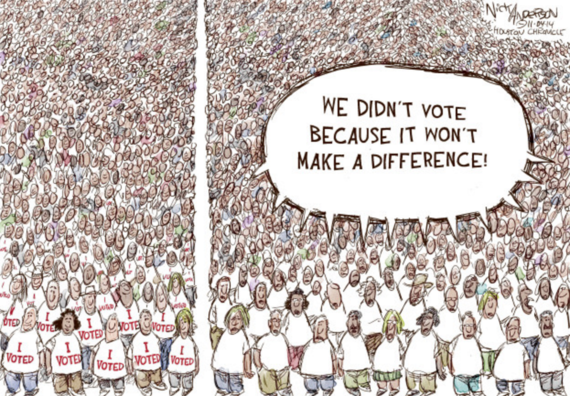
Though one cannot completely blame the populace for their voting behavior. We must also look upon the system that we live in and the conditions that made these outcomes possible. The cyclical poverty, lack of quality education, issues of economic and political nature, rampant corruption and lack of accountability in the government exists and has crippled the masses and shaped the point of view of the Filipino people. Perhaps it is the recurring poverty that has brought upon the vulnerability of voters to ill transactions done before the election and the campaign and these vulnerabilities are utilized by some for their own interests.
For the common Pilipino like me the question would be “anong magagawa ko?”
Rizal once implied that we get the government (and the leaders) that we deserve. However, does the Philippines really deserve the leaders that we have today?
Power must emanate from the people. This means that all Filipino and groups, regardless of religion, political beliefs, socioeconomic status or age is a stakeholder. Citizen participation comes in many different ways and there are many types of citizen engagement or action. The levels of participation can be identified as non-participation, tokenism, and to citizen control[1]. Non-participation is the lowest rung wherein the real objective is to educate people or “cure” and does not involve them in the planning and other aspects of the program. Tokenism provides an avenue for the voice and views of the citizens, however, there is no assurance that these views are heard or acted upon. Finally, up in the higher rungs of the ladder lies citizen power where the people are the dominant powerholder and has an increasing level of influence in decision making.
Public participation, with its perks, also comes with disadvantages. Citizen participation can strengthen rapport between the government and the masses whilst possibly improving government planning through a needs-based approach. It may improve the quality of decisions and actions of the government by being more people-centered. Citizens will also have a higher sense of inclusion and perceived importance in their role as member of the society as well as a higher regard and understanding for government processes. Ultimately, by harboring the various voices of the people and providing a platform wherein these opinions are considered, only then will genuine consensus be built. However, citizen participation also comes with disadvantages or difficulties. One of which is the time and financial costs that this would incur. For national issues, it will be harder to take into account each and every stakeholder’s interest and it is even harder to weigh these interests. There are also factors such as the influence of some interest groups may dominate over others. Stakeholder groups with concrete and highly dominative influence and values may overshadow others prematurely. This may, instead of promoting social cohesion and unity, can cause a rift between groups with strong political and social ideals. Lastly, the government might receive the bulk of the hostility in the process.
To end this reflection on citizen participation, I would like to focus on the concept of social accountability[2]. Apart from the traditional modes of civic action such as election and rallying, social accountability refers to actions done by civil society groups or your average Filipino citizen that aims toward holding officials and public servant accountable for their performance. Its ultimate goal is to improve the welfare of the people and protect our rights. What makes social accountability a more preferred mode of citizen participation is it’s four pillars which are: (1) organized and capable citizen’s groups; (2) willing and enabling environment promoted by public officials who champion citizen power; (3) cultural appropriateness; and (4) access to information.
This approach encourages constant vigilance, proactiveness and awareness in the part of the public long after the election season is over. Aside from these, social accountability grounds itself in gathering data and analyzing existing information to serve public interest efficiently, effectively, and fairly. Social accountability, for me, is a higher form of engagement since it demands and fosters accountability from both the government and the public. Its principles advocate a responsible form of civic society engagement that does not capitalize in petty mudslinging or libelous statements.
The last point that I would like to impart is that citizen and voter’s education is the paramount concern. Above anything else, educating and spreading awareness is the most important part of civic participation, regardless of the method and boundaries of citizen participation available or operationalized in the society. For regardless of the size, influence and diversity of civil society organizations, unless they operate on free minds, free will, and sincere regard for public interest, they will be merely puppets and machinations to the ploy of self-centered individuals that use the masses to their advantage.
[1] https://www.open.edu/openlearn/ocw/mod/oucontent/view.php?id=21024§ion=4.1
[2] http://siteresources.worldbank.org/INTMONGOLIA/Resources/What_is_social_accountability.pdf
-bbq
 CLAVE
CLAVE 