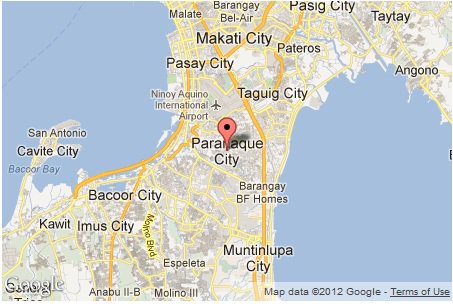
City of Parañaque
One might ask, “Bakit ganito ang Pilipinas?”
Corruption. Crime. Poverty, Injustice. Unemployment. Lack of Education. Overpopulation. Pollution.
These are one of the many things that the Filipinos grumble about everyday and the media feasts on the various problems that the country faces. However, in the mix of all the murder, crime and bad governance the Filipino people are branded as the third happiest country in the world [1]. Are we really a resilient nation that we think ourselves to be or are we numbed by the reality that our country is festered by the various issues plaguing our society.
The thing is, we are part of the problem. We are fragmented by a myriad of issues such as religion, political affiliation, organization membership, social status, educational attainment, geographical relation and many other more. Such fragmentation of the people may be completely eradicated for one is entitled to his own decision, preference and belief and are free to stick to such values. One might even say that these divisions naturally occurs and gives rises to the equity. It is unfortunate, however, that the greatest factor that divided one from another mainly stems from the Filipino people.
We are divided by our self-interest and the desire to answer to these interests above anyone else’s even above the interest of this country. Philippine politics for example, embodies the importance of the interest of Filipino politicians. Every election we are bombarded by politicians swearing that they are not running not for their own good but for the betterment of the people that they represent. Unless I am living a life of seclusion and ignorance, it is apparent that these promises end up as what we call as “napapako”. Thus, after the election period, the promised farm to market road are constructed (after some time and too much money), unsurprisingly, near the subdivisions, farms, resorts, hotels, or any business interests of our elected public “servants”. Removing the term limit for elected officials, is another example of a self-serving proposition. Lastly are the political parties in the Philippines, that are, contrary to its original purpose, seemingly formed for the sake of elections and are barely held together not by principles but of political affiliation and trends. AS such, whenever the presidency is handed to a new president, the shifting in alliances also follows, thus resulting to political butterflies. Such practice would even lead to a rubberstamp Congress led by the party-run majority. Rare it is to see a politician who stands by his nationalistic principles and stands firm against political pressure, perhaps the species has long gone extinct.
However, politicians are not alone in their self-enriching acts, in fact, this trait may be observed widely. It may be true that, in fact, our greatest enemies are ourselves. Largely from the fact that many of our institutions including education, governance and religion are from the colonizers, we may have lost our sense of identity and nationalism. It may also be that the events that devastated our country coupled with consumerism and commercialism caused people to see accumulation of assets and gains as paramount and equates to the ‘ideal and good’ life. Regardless, we must always ask ourselves if we have served enough for our country so that the country may serve us as well.
Do we…
-vote wisely?
-pay our taxes?
-comply by the laws?
-help our fellow countrymen?
-hear the opinions and concerns of our countrymen?
-fight for our rights?
-keep yourself informed about the issues of this country?
-dedicate our abilities and skills that, in any way, help in the betterment of this nation?
Responding to the first question, I would ask, “Bakit ganito ang Pilipino?”
Why do we keep looking outward and above? Why do we refuse to acknowledge our own lapses?
For so long, Filipinos have been divided for a number of reasons and factors. These factors will not cease and may even be essential to maintain the discourse and exchange of opinions of every stakeholder, that is, the Filipino people. However, it is time that we realize that the solution to our problems is not fragmentation or conflict but a unified goal of developing the nation.
As a parting reminder, our national hero, Jose Rizal posits that a government that is just may not spring from an unjust populace
[1] Placido, D. (2018). PH third happiest country in the world – Gallup survey. ABS-CBN News. Retrieved from https://news.abs-cbn.com/focus/01/02/18/ph-third-happiest-country-in-the-world-gallup-survey.

– #tinola
As a UP student who commutes through katipunan, seldom does a commuter experience little to no traffic along C5, especially in the morning. This traffic is unavoidable since the main cause of traffic are the intersections, wherein the flow of traffic needs to be disrupted to give way for a different flow of direction, cars are to stop and causes bottlenecks, hence.. traffic. So… what to do when stuck in traffic? Since traffic is unavoidable there are a lot ways to entertain oneself, but here are the few things I do when I get stuck in traffic.
This list is from my own personal experience and practice, any similarities are completely coincidental. When in traffic you can actually do a lot of things but what I like to do
When getting struck, it inevitable to get enraged, especially if you need to be somewhere as soon as possible. However, traffic is part of our society, there will always be traffic wherever you go. Traffic will always be present, but don’t let traffic ruin your day otherwise you just got mad for nothing. It is true, traffic is no joke and waste so much time. To this day, traffic is still one of the topics that bothers me and I hope traffic can be addressed as soon as possible. Who wants to invest so much of their time in traffic?
The K-12 program was an initiative of the Noynoy Aquino administration. The program, as we all know, is widely practiced in the educational system of Western countries, especially the United States of America. Since the Philippines is only one of the few countries that do not implement such a program in secondary education, the country followed the steps of Western countries by formulating our K-12 program to be at par with these countries. One of the objectives of the program is for globalization.
In its purest form, the K-12 program is aimed at exporting more Filipino citizens outside the Philippines to work. We simply are not changing the mindset of our men and women for the betterment of the Philippines because in the first place, we have created a program, that is patterned with that of the Western countries. We may be, as Renato Constantino has put it, miseducating our fellow countrymen in the sense that we are teaching them to be more like Americans, through the adoption of the K-12 program, and not to be Filipinos. As Boller and Halbert (2015) stated, “Globalization… and migration have all helped disrupt the alignment between the individual citizen and their country of origin”(p.304).
We are creating Filipino citizens who will then migrate in America and become American citizens leaving behind their Filipino identity since we have patterned our education’s objective is to globalize. We are even proud to have our own “green card”. Unlike American expats living abroad who are in an advantage since they carry with them a privilege of being an American, Filipinos do not have that kind privilege since we are a part of, as they call it, the Third World country. Some accounts even stated that Filipinos are not proud to be called as such because being Filipino has a negative connotation. I believe this is true. I have heard my cousin once, who was born and educated in London, that he is not a Filipino.
We are merely creating a new generation of OFWs to work for America. Furthermore, we may lose the young men and women of our country, the Pag-asa ng Bayan, who will care, love, and fight for the Philippines. In a sense, we are giving up the success story of the Philippines because we are building a nation, that do not honor and strengthen the country, including its culture, its ideals, its own development. We do not aim to be Citizens of the World, rather, citizens of America through the adoption of the K-12 program.
–Pinakbet
Boller R. & Halbert, D. (2015). American citizenship and expatriatism: identity and politics outside the state. Retrieved from https://www.tandfonline.com/doi/abs/10.1080/13621025.2015.1006582?journalCode=ccst20.
Constantino R. (2002). Mis-Education of Filipinos. Journal of Contemporary Asia. Retrieved from https://filipinostudies.files.wordpress.com/2012/01/constantino.pdf.
by Adobo
Boller and Halbert’s American Citizenship and Expatriatism paper talks about the American expat experience as well as the concept of “global citizenship”. Aside from work and entrepreneurial opportunities, a major reason cited for expatriatism is an increasing disassociation from the American Dream, with a yearning to experience different cultures driven by curiosity and discontent. In short, American expats often leave their home country to explore and experience the world.
In the Philippines, however, not a lot of Filipinos have that privilege. While it’s true that the average Filipino middle-class family can afford to travel abroad for leisure (Filipinos made around 5.1 million international trips in 2015![1]), there are still many who leave the country for work. Latest data from the Philippine Statistics Authority shows that the total number of Overseas Filipino Workers (or OFWs, the Filipino counterpart of the American expat) was estimated at 2.3 million during the period of April to September 2017 alone[2], with a majority working blue-collar jobs. This points to a heavy reliance on foreign remittances from OFWs, and is reflected in Bangko Sentral ng Pilipinas’ report on OFW cash and personal remittances in 2017. Totaling a whopping $28.06 Billion for cash remittances and $31.29 Billion for personal remittances, OFW income and remittances account for a substantial chunk of our country’s 2017 GDP and GNI[3].
While it is generally acceptable to work overseas, here’s where it gets problematic: a heavy reliance on OFW remittances could mean lesser government efforts to develop human capital for the country’s own progress and industrialization. Upon closer observation, we could note that government efforts towards developing its human capital seems to be directed towards the Filipino’s marketability – just the use of English as the medium of instruction instead of Filipino gives us the implication that a Filipino child is honed to work overseas from the moment he or she starts school. There also seems to be a premium placed on college courses like nursing, engineering, and teaching – graduates of which often seem to opt for job opportunities abroad, and we can attribute this to the fact that jobs in these fields (and other fields, such as research) don’t pay well if you work here in the Philippines. As a result, the Philippines remains a developing country with a heavy reliance on agriculture and services rather than industrializing.
To answer the question, what bothers me most in light of the discussions tackling the aforementioned issues is that there is not enough government support for developing its human capital for its own sake. For instance, there is a lack of government funding in areas like research and development leading to a reliance on imported technology rather than increasing support for local researchers and developers. Because of this (along with low wages despite harsh working conditions), the typical Filipino, regardless of his/her chosen career path, is discouraged to work here in the Philippines, therefore creating a cycle of mere production of human capital that is not only marketable to other countries, but is actually more driven to leave the country for work. While I believe every person has the right to experience different cultures and conform to whatever concept of citizenship they prefer (as discussed in class), taking a closer look shows us people like OFWs simply do not have a choice, and the absence of it is what bothers me most.
[1] Abellanosa, P. (2016) Filipinos made at least 5.1 million international trips in 2015. Workalife blog. Retrieved from https://workalife.com/2016/06/12/filipinos-4-7-million-international-trips-in-2015/
[2] Philippine Statistics Authority (2018). 2017 Survey on Overseas Filipinos (Results from the 2017 Survey on Overseas Filipinos). Retrieved from https://psa.gov.ph/content/2017-survey-overseas-filipinos-results-2017-survey-overseas-filipinos
[3] Schnabel, C. (2018) PH remittances beat gov’t target, hit record in 2017. Rappler article. Retrieved from https://www.rappler.com/business/196148-philippines-ofw-remittances-december-2017
by Sisig
The term ‘expatriate’ is not something I hear on an everyday conversation even though it is a social reality– and it is true for the people that we know, that people travel abroad and live somewhere there if they could. We have always known them as ‘nag-abroad’, ‘nasa abroad’, or the ‘OFWs’. In this paper that we read, they are identified to be expatriates which I don’t hear a lot, but it connotes a more negative term as it is literally synonymous to banishment. It is intriguing that the know connotation of these terms are on polar opposites.
In the Philippines, if someone is known to be working and living abroad people seem to automatically think that they are living better lives, as well as providing more avenues to better the lives of their families. However there is a slight but important difference between the 2 groups of ‘expatriates’ in the Philippines. Firstly, there are the ones who migrate and live abroad in the hopes of becoming a full-pledged citizen together with their families, these are the ones mostly traveling specifically to the United States of America or in Canada and live their life as a citizen– spending their resources their, giving labor to the country, and accruing the benefits of the country. Essentially these are the ones who want to start a life there, build their families, and thrive in their field. It is their way of having better lives than what they have in the Philippines, and passing on that standard of life to their future children. The second form of expatriates are the OFWs. They are the newly recognized Filipino heroes of this generation. Unlike the Filipinos who migrate abroad and turn themselves into a citizen of another country, the OFWs leave their families here in the Philippines. They are still a Filipino and identify as Filipinos. Their way of providing better lives for their family is by sending remittances and balikbayan boxes for the family to spend here in the Philippines. This is usually the set-up for OFWs because most of them only work abroad for a certain period of time to earn enough and come back in the Philippines, and build a better livelihood from the money they saved up abroad, some OFWs are not legal in the country start with. Although some OFWs who do not have kids tend to stay in their chosen country and build a life their as well, which they had deemed to be better.
This phenomenon is understood to be the Filipino Diaspora. Inquirer (2011) says that it was during the administration of Marcos that lead to the widespread Filipino diaspora. It was the severe economic depression, lack of job opportunities and political oppression– Filipinos desperately sought after better lives for their families and took risks and bravely went to strange countries, immersed in different cultures, to take whatever job was available. American expatriates, show that Westerners have an individualistic perspective and culture as they travel and live elsewhere to grow and widen their horizons and better themselves in totality. While the Filipino, having a family-oriented value and a collectivist perspective and culture, shows that they would want to be building their lives here with their families and friends, if they only had the bare minimum opportunities to build the life that they want to.

With the first set of reportings in PA 162 tackling about the different views on citizenship, my original idea on the term has been constantly challenged. In the Philippines, you will be considered a Filipino if you were born and raised in the country or if you have a “Dugong Pinoy”, meaning that at least one of your parents is a Filipino citizen. In short, it is very technical.
But with all those readings that were given to us, reported by my classmates, and discussed by sir, this common idea of citizenship has been challenged in my mind. It now seems that citizenship became more subjective and generally depends on a community or communities wherein an individual feels at home, where he belongs and in this world of globalization, I do not see anything wrong with that. Instead of seeing it as nationalism versus globalization, it is more of nationalism and globalization. I think that they can come together because if you give the people the right amount of freedom, they will be more satisfied and motivated to become productive members of the society, but what made me think twice on my thoughts was after watching those videos regarding human rights plus the class discussion about it. If ever we are that “free” to define our citizenship, then the new challenge would be how to know who will be reliable for different cases that may involve the security and human rights of the people.
-Pic-A, 2019
The views expressed in the essays appearing in this website are attributed only to the identified author/s, and do not represent the views of the entire group, the class, the course instructor, nor the university to which the student belongs.
 CLAVE
CLAVE 